



Quantum Dot PV: Excitonic or not Effect of side groups on polythiophenes Vacuum Deposited Oxide Solar Cells

Quantum Dot PV: Excitonic or not

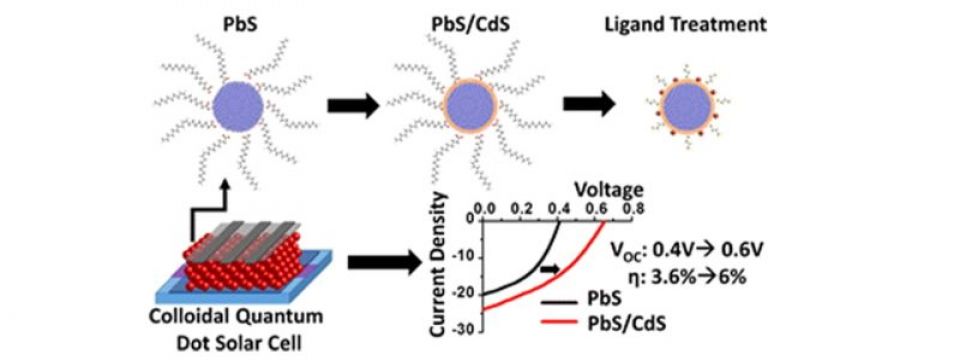
The operating mechanism of quantum dot heterojunction has been an area of debate for years. In this paper, we studied the junction behaviour of PbS/ZnO quantum dot heterojunction. We have found that there is a transitional behaviour from excitonic to p-n junction upon photodoping of ZnO. The article was published in Nano Letters

Effect of side groups on polythiophenes

We have shown that vacuum thermal evaporation is a suitable method for the deposition of low solubility polymers. Planar solar cells based on PTh (side chain-free equivalent of P3HT) exhibit 70% increase in efficiency due to enhanced molecular order and charge extraction. The article was published in Organic Electronics.

Vacuum Deposited Oxide Solar Cells

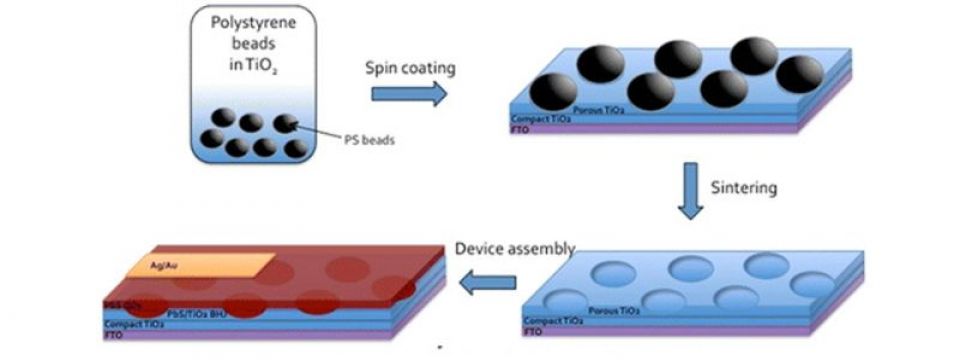
Different heat treatments yield variations in the ratio of orthorhombic to tetragonal lead oxide that lead to different device performances, where devices with a higher content of orthorhombic PbO show higher power conversion efficiencies of up to 0.17%

PreviousNext

Welcome

Welcome to the Solar Cell Research Initiative of the Materials Department at Oxford University. The purpose of this group is to draw together scientists and engineers with an interest in how light energy is absorbed, dissipated, transported and stored. Combining research programs in experimental and theoretical solid state physics as well as material synthesis and characterization we aim to create and develop sources of sustainable energy driven by the power of the sun.